Perception of time : a use-case

How we improved perceived waiting time for users
Context of the product
We developped a digital product on tablets to entertain patients in healthcare establishments.
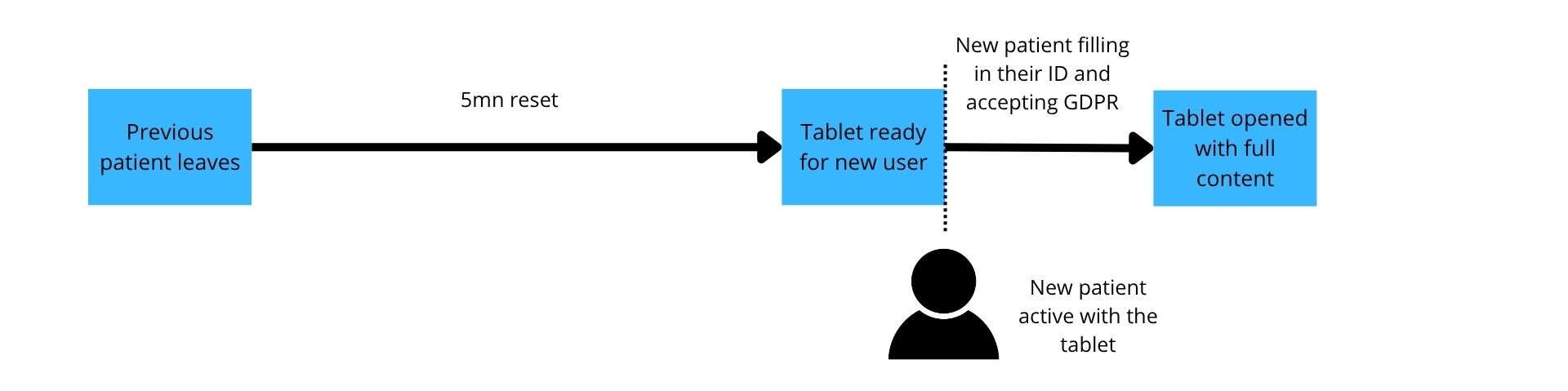
When a patient left, we reset the tablet so the next patient could not see what the previous had done and all their sessions were wiped clean.
Then the new patient would identify themselves on the tablets, accept the GDPR notice and apps / content would be loaded for them.
What we wanted to improve
Due to technical reasons, it would take 5 minutes for the tablet to be ready for the next patient.
We could not improve that time without risking compromising the previous patient's privacy.
As a result, not only would the new patient have to wait, but the person handing them the tablet would also stay longer with the patient instead of focusing on other tasks.
How could we put the tablet in the hands of the patient faster and make them active instead of just waiting?

How we solved the issue
We listed our constraints :
1) The technical team had to send asynchronous commands sent to the tablets without acknowledgement, so we needed to send each command multiple times to make sure they went through. This meant a tablet was wiped in 30 seconds, then we could start sending commands to display our ID / GDPR portal for the new patient and start loading content until the tablet was ready, the whole operation taking 5 minutes.
2) Legal's constraint was the obligation to identify the new patient and make them accept the GDPR notice before using the tablet.
3) UX's constraint was to let the patient know what was happening and put them in charge of the tablet as soon as possible.

Our solution was to do the wipe and load up our ID / GDPR portal. A patient would take a bit of time to enter their ID and accept the GDPR notice, then we would inform them the content was loading. They could see the icons corresponding to the content loading 2 or 3 at a time and could already start using what was available.
Measurable gains
It took roughly the same time to fully reset a tablet, but we gained 90% of perceived waiting time for patients and allowed them to start their activity with what became available bit by bit.
‍
This made new patients active much faster and was praised by medical / administrative crew as it also meant they could hand out a tablet in 30 sec rather than 5 minutes and focus on their other tasks.

Thorough testing ensured we did not lose on robustness or introduce new issues.